Here are nine boxing facts worth knowing, from how bouts are scored to why the waistband on your shorts matters. Rules differ between amateur (Olympic-style) and professional boxing and between organisations, so check the rulebook for any event you enter.
1. Amateur and professional boxing are run by different bodies
Amateur boxing is organised by national federations, such as England Boxing or USA Boxing, and international federations. In February 2025 the International Olympic Committee provisionally recognised World Boxing as the international federation for Olympic boxing, and in March 2025 boxing was confirmed for the Los Angeles 2028 Games. Professional boxing is regulated by national or state commissions, while sanctioning bodies such as the WBC, WBA, IBF and WBO award world titles.
2. Elite amateur bouts are three rounds of three minutes
In elite amateur boxing, men’s and women’s bouts are generally three rounds of three minutes with one minute’s rest between rounds. Professional bouts are usually scheduled for between four and twelve rounds, depending on the boxers’ level and the contest.
3. Most bouts are scored with the 10-point must system
Judges award 10 points to the boxer who wins a round and 9 or fewer to the other. Points can also be deducted for fouls. At the end, the boxer with the most points on the majority of judges’ scorecards wins.
4. A clean punch lands with the knuckle part of the glove
To score, punches must land with the knuckle part of the closed glove on the legal target: the front and sides of the head and the body above the belt. Punches to the arms or gloves, and open-glove slaps, do not score.
5. “Below the belt” is defined by the waistband
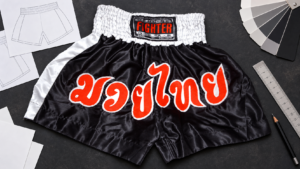
England Boxing, for example, defines the belt line as a line from the navel to the top of the hips. Punching below it is a foul. That is why competition rules often say how shorts must be worn: England Boxing’s rule book says shorts must not be worn above the belt line. When the vest and shorts are the same colour, the waistband is often required to contrast so that the belt line is easy to see. Check your organisation’s uniform rules before ordering competition shorts.
6. There are several ways to win
A boxer can win by points decision, by knockout, by the referee stopping the contest, by retirement when a corner pulls their boxer out, or by disqualification of the opponent. A bout can also end in a draw in professional boxing.
7. The referee controls the ring with three words
“Box” starts the action, “Stop” halts it, and “Break” separates boxers in a clinch. Read more in the common commands used by boxing referees.
8. Common fouls go beyond low blows
Hitting below the belt, hitting the back of the head or neck, holding, pushing, using the head, shoulder or elbow, and hitting an opponent who is down are all fouls. Depending on the rules, fouls lead to cautions, warnings, point deductions or disqualification.
9. Kit is part of the rules
Boxers must wear approved gloves and a gum shield. Amateurs usually wear a vest or top, and some categories require headguards. Rules also cover shorts length. England Boxing’s 2026 rule book, for example, says shorts must be no shorter than mid-thigh and must not cover the knee. Many organisations also limit logos or advertising on competition kit.
Planning competition shorts? See our guide to boxing match rules and the custom boxing shorts guide, then contact PAILK with your organisation’s kit requirements.